The SAVI Ministries is a faith-based nonprofit humanitarian institution. Its work is carried by three integrated engines, a faith aligned humanitarian network, Compassion Flights, and the SAVI Ministries Endowment Foundation, coordinated through governance discipline so that mission, access, and continuity remain protected across time.
Communities living at the edge of medical access, geographic isolation, or institutional collapse encounter conditions whose duration is structural rather than circumstantial: their hardship persists without regard to the attention of those positioned to address it, operating on a timeline indifferent to funding cadence, news cycles, and the periodic visibility of the organizations built to respond.
Episodic charity and program-shaped relief, well intentioned in conception and responsive in moments of acute visibility, were not designed to remain present once attention moves elsewhere; the majority depart at precisely the point at which sustained engagement would matter most, leaving behind an absence of trust as enduring as the original deficit of access and a recipient population for whom the next intervention will arrive carrying the institutional cost of the prior exit.
The SAVI Ministries was built to answer that failure structurally rather than rhetorically, organized so that governance protects mission from drift, capital discipline holds the institution stable beyond any single budget cycle, and three coordinated engines, a faith aligned humanitarian network, Compassion Flights, and a perpetual endowment, carry presence into the geographies and timeframes that shorter-horizon models cannot reach.
The conviction beneath this construction is older than its institutional form: that faith expressed through service is only as durable as the structure that carries it, and that the architecture of governance, capital discipline, and execution exists not as administrative overlay but as the mechanism through which compassion is held against fragmentation, mission against the entropy of circumstance, and trust against the temptation to treat continuity as episodic.
The SAVI Ministries exists so that compassion does not depend on momentary attention to remain organized, so that resources deployed in service of mission are held to the fiduciary discipline appropriate to capital placed in permanent trust, and so that those who give and those who are served are honored through commitments the institution is structured to keep.

The SAVI Ministries is constructed so that no element of its mission stands alone. Four institutional dimensions (spiritual formation, humanitarian execution, human restoration, and institutional stewardship) are integrated within a single governance framework so that what each contributes is held accountable to the others and to the whole. The visitor encounters them not as initiatives but as the coordinated logic through which the institution operates.
These four dimensions function as one institutional logic. Their integration is what allows the three execution engines, introduced in the sections that follow, to deploy presence, mobility, and continuity as a coordinated capability rather than as independent programs.
The Faith Aligned Humanitarian Network is the coordinated field access and execution layer designed to enable organized mission presence across geographies. It is the first of the three engines, and it functions as the institution's relational infrastructure: the human and partnership architecture upon which everything else operates.
What distinguishes the Network from a coalition or directory is the architectural orientation it carries. Membership is a function of operational alignment, not affiliation, and is built around the premise that humanitarian access depends less on technology than on trusted, sustained relationships in the places where the institution intends to serve.
The institution's faith is not treated as a sentiment or a slogan. It is the doctrinal foundation that defines who participates, on what terms, and to what standard of conduct. The Network holds spiritual alignment and operational structure as inseparable conditions of membership, rather than as choices made independently of one another.
Explore Network
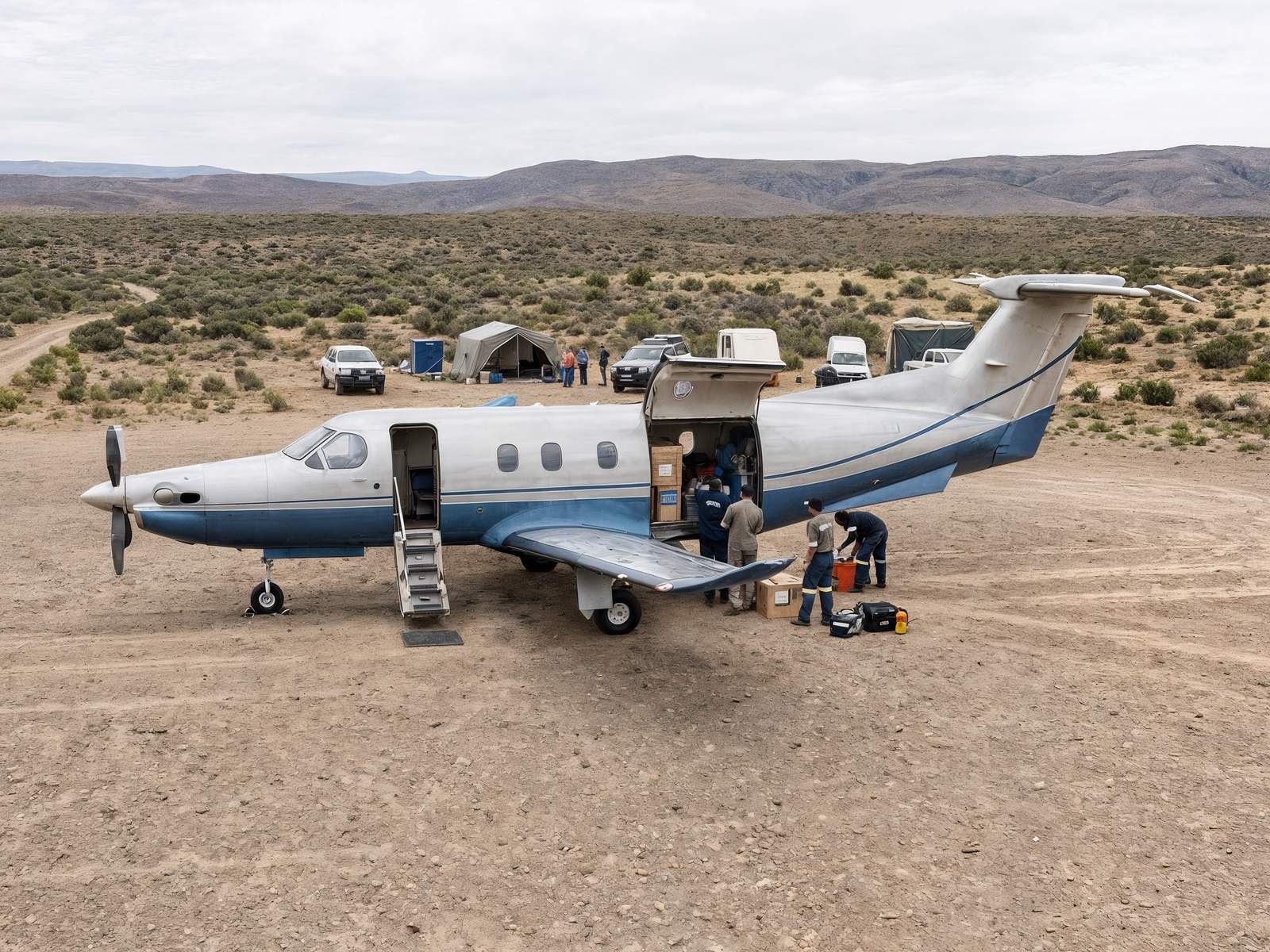
Compassion Flights is the aviation access infrastructure designed to extend mission reach into the geographies and operating conditions that traditional transportation systems cannot easily serve. It is the second of the three engines, structured to address the constraint that determines, in many humanitarian environments, whether care can arrive in time.
Within the three engine system, the aviation layer is the capability designed to allow field presence to function in places where ground infrastructure is unreliable, distances are prohibitive, or response windows are short. Its role is to enable rather than to perform: a capability structured to let the Network reach communities, partners, and circumstances that would otherwise be inaccessible to disciplined field work. That capability is held within the discipline that governs every other component of the system, structured as access infrastructure and held to the institutional standards of governance, accountability, and stewardship that apply across the platform.
Understand Aviation MissionThe SAVI Ministries Endowment Foundation is the disciplined stewardship system through which the capital entrusted to the institution is preserved, governed, and deployed in service of long horizon mission endurance. It is the third of the three engines, and it functions as the continuity architecture that allows commitments entered today to outlast the conditions under which any single one of them was set.
Stewardship of this capital is held under formal governance, including a written Investment Policy Statement and a defined distribution framework that maintain the corpus across market cycles, leadership transitions, and the institutional pressures every long horizon endowment must absorb. Continuity therefore is structural rather than aspirational, a direct function of how the rules of the system are documented and the standards to which their application is reviewed. The Endowment functions as mission infrastructure. It exists so that the institution's long horizon obligations are governed by capital architecture rather than by the variability of attention or the timing of any individual decision to support the work.
The Endowment represents a structural answer to an enduring problem: a capital architecture designed so that the mission does not negotiate with volatility, depend on circumstance, or ask the communities it serves to bear the cost of institutional fragility.
The SAVI Ministries is built on a governance architecture, not on a slogan or a moment. Every component of the platform, from mission to capital to execution, operates under the same documentary discipline that allows commitments made today to be answered for across the decades over which the work is carried.
A governance architecture gives the institution the capacity to honor its commitments across the horizon in which leadership transitions, funding cycles, or circumstances no organization can anticipate change the operating environment. It is what permits the platform to face the scrutiny donors of consequence apply, and to meet the diligence standards advisors are professionally bound to bring.
Concretely, the institution carries Articles of Incorporation, Institutional Bylaws, and a complete suite of governance policies covering board conduct, executive compensation, conflict of interest, document retention, whistleblower protection, and risk management, each ratified through formal resolution and available for review. The mission system and capital stewardship framework have been defined with deliberate precision, structured for discipline across decades rather than for dependency on quarterly conditions. The three execution engines are integrated by design, not by accumulation.
Structure of this kind does not emerge by default. It is the product of disciplined construction calibrated to the standards by which it must be examined and the scale at which the work must one day be carried. The record is documented, adopted, and open to those who require it.
Its governance architecture has been formally established and adopted through Board resolution, and the record is open to those who require it.
The roadmap above traces the current development phase, the governance and legal architecture under which the institution operates, and the structured sequence through which subsequent stages are reached. Each item represents a completed document, formally enacted and held to the accountability standard the mission itself is structured to demand.
The institution has been built to withstand scrutiny, and it welcomes the examination of those for whom formal review is a professional obligation. The materials pathway is structured to serve that purpose.
The institution serves distinct audiences whose interests, responsibilities, and points of entry differ; each route below corresponds to a specific relationship to the work.
For those establishing long-horizon philanthropic alignment with a governed institution organized for capital discipline and mission continuity, the stewardship architecture, governance framework, and endowment system provide the appropriate starting point.
For those conducting institutional due diligence on behalf of a principal, family office, or organization evaluating philanthropic deployment, the governance architecture, leadership structure, and formal proof pathway offer the appropriate entry.
For those exploring mission alignment, field collaboration, or organizational engagement with the humanitarian execution system, understanding how the institution operates as an integrated platform is the right foundation.
For those drawn to the spiritual grounding of the institution, the teachings, or the calling that animates its service, identity and mission provide the natural place to begin.
The SAVI Ministries was built for the kind of institutional relationship that develops through shared understanding rather than quick acquaintance, the engagement that forms between people and organizations bringing to serious work the patience, rigor, and long-horizon commitment its execution requires.
The materials available through this platform are designed to answer the questions that matter: the identity of the institution, the architecture of its governance, the scope of its current progress, the direction of its ongoing development, and the deliberate sequence connecting them. For those whose interests extend beyond the public layer, structured review pathways are available, and the institution engages within them with the discipline and confidentiality that characterizes its conduct in every other context.
The seriousness of the work is sufficient reason for engagement. This institution exists for those who already see that, and it remains in readiness for readers for whom that recognition takes longer to arrive.
Five answers to questions most commonly raised by visitors, evaluators, and potential partners. Twenty-five additional answers across eight thematic clusters are available on the full FAQ page.
See All 30 QuestionsA faith-centered humanitarian institution, incorporated as a 501(c)(3) nonprofit in Washington State, operating through three integrated execution engines: the Faith Aligned Humanitarian Network, Compassion Flights, and the Stewardship and Endowment Foundation. Governed by a formally adopted Board framework and nine governance instruments designed to protect mission integrity across leadership transitions.
Full answer · FAQThe institutional stewardship engine through which philanthropic capital is governed, invested, and deployed in support of the mission across multi-generational horizons. It operates under a formally adopted Investment Policy Statement and Board oversight. Not a vehicle for short-term program funding: the architecture through which long-horizon mission permanence is protected.
Full answer · FAQEngagement is organized through four distinct pathways: Philanthropic Contributors, Strategic Advisors, Field and Network Partners, and Spiritually Aligned Supporters. Each serves a different institutional function and follows a different engagement process. The starting point is identifying which pathway correctly describes the relationship being considered.
Full answer · FAQThe institutional aviation engine of The SAVI Ministries, designed to extend coordinated humanitarian capacity into rapid-response, remote, infrastructure-limited, and time-sensitive contexts where conventional ground access is constrained, delayed, or unavailable. Operates under the governance framework of the institution with operational disciplines defined by humanitarian aviation standards.
Full answer · FAQLegally independent entities sharing a common founder, Santiago Vitagliano, and a binding structural economic relationship encoded in The SAVI Group fund-document terms. The SAVI Group is the ecosystem capital partner of the nonprofit via Tenet 4 of The SAVI Capital Model: overage returns above a 5x distribution multiple flow from The SAVI Group to The SAVI Ministries Endowment Foundation.
Full answer · FAQ